
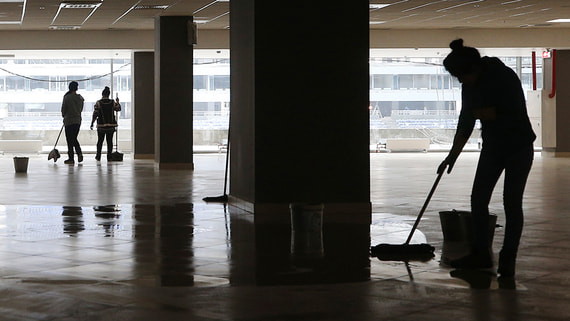
Representatives of Russia’s cleaning industry have put forward an ambitious proposal to create a dedicated tax regime specifically designed for the sector, aiming to bring a significant portion of the shadow economy into the legal framework. The initiative suggests implementing a unified tax system similar to the automated simplified taxation system (autoUSN) that has proven effective in other industries. This proposal comes as businesses and government officials increasingly focus on formalizing economic activities and ensuring fair competition across various sectors of the Russian economy.
The cleaning industry in Russia has long struggled with widespread informal employment and tax evasion, creating an uneven playing field between compliant businesses and those operating in the gray zone. According to industry estimates, a substantial portion of cleaning services in the country are provided through unofficial channels, with workers being paid cash-in-hand and employers avoiding social contributions and taxes. This situation not only deprives the state budget of significant revenue but also leaves workers without proper social protections and benefits.
Understanding the Proposed Tax Framework
The proposed special tax regime would function similarly to the automated simplified taxation system, which has already demonstrated success in streamlining tax compliance for certain categories of businesses. Under such a framework, cleaning companies would pay a single consolidated tax that replaces multiple separate obligations, significantly reducing administrative burden and making compliance more attractive for businesses currently operating informally. Industry representatives argue that the simplified approach would lower the barriers to entry for legitimate operations while making tax evasion less economically advantageous.
The autoUSN system, which serves as the model for this proposal, was introduced in Russia as part of broader efforts to digitalize tax administration and reduce compliance costs for small businesses. It allows qualifying enterprises to have their taxes calculated automatically based on banking transactions, eliminating the need for complex accounting and reporting procedures. Applying similar principles to the cleaning industry could potentially transform how the sector operates, bringing thousands of businesses and workers into the formal economy.
Economic Impact and Industry Challenges
The Russian cleaning services market has experienced significant growth over the past decade, driven by expanding commercial real estate, increasing hygiene awareness, and the outsourcing trend among businesses seeking to focus on core competencies. However, this growth has been accompanied by persistent challenges related to labor practices and regulatory compliance. Many cleaning companies face intense price competition from informal operators who can undercut legitimate businesses by avoiding taxes and labor regulations, creating a race to the bottom that ultimately harms workers and responsible employers alike.
Industry associations have long advocated for government intervention to address these structural problems. Previous attempts to tackle the shadow economy in the sector through increased enforcement have had limited success, as the fragmented nature of the industry and the prevalence of cash transactions make monitoring and compliance difficult. The new proposal represents a shift toward incentive-based approaches, recognizing that making formalization attractive may prove more effective than punitive measures alone.
Broader Implications for Russian Tax Policy
The cleaning industry’s proposal fits within a broader trend of sector-specific tax solutions gaining traction in Russian economic policy. Authorities have increasingly recognized that one-size-fits-all taxation approaches may not adequately address the unique characteristics of different industries, particularly those with high labor intensity, low margins, and prevalence of small operators. If successful, the cleaning industry initiative could serve as a template for similar reforms in other sectors facing comparable challenges with informal employment and tax compliance.
Government officials have shown openness to discussing innovative approaches to taxation, particularly those that promise to expand the tax base while reducing administrative complexity. The Federal Tax Service has been at the forefront of implementing digital solutions that simplify compliance, and the proposed regime would align with these ongoing modernization efforts. However, any new tax framework would require careful analysis to ensure it achieves its intended goals without creating new loopholes or unintended consequences that could undermine the broader tax system.
Expert Opinion: The proposal for a dedicated cleaning industry tax regime represents a pragmatic approach to a persistent problem, but its success will depend heavily on implementation details and enforcement mechanisms. If structured correctly, such a regime could increase formal sector participation by 30-40% within the first few years, generating both additional tax revenue and improved worker protections. However, policymakers must balance simplification with safeguards against abuse, ensuring that the new framework doesn’t simply become another avenue for tax optimization by larger players at the expense of genuine small operators.