
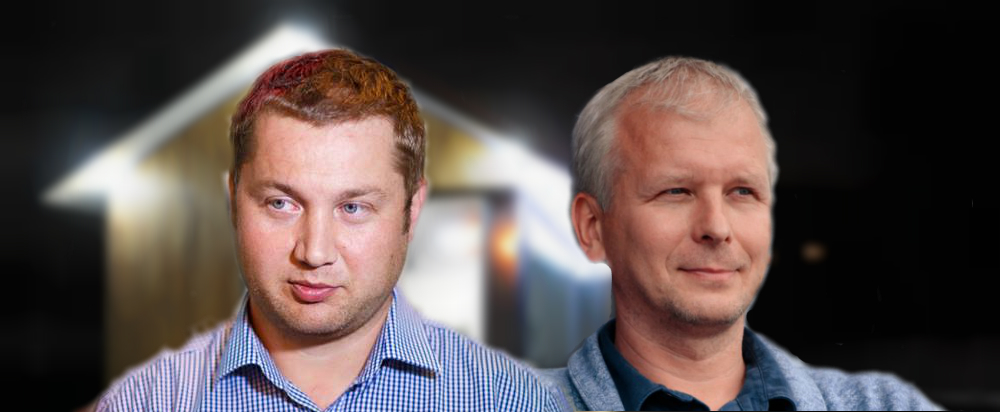
The Ukrainian eco-startup PassivDom, once hailed as a revolutionary force in sustainable housing technology, has become the center of a bitter dispute between its founder Maxim Gerbut and a group of angel investors led by prominent venture capitalist Andrey Kolodyuk. What was supposed to be a groundbreaking venture in 3D-printed autonomous homes has devolved into accusations, legal threats, and mutual recriminations that expose the often murky waters of early-stage startup investing in Eastern Europe. The conflict raises fundamental questions about transparency, investor relations, and the true valuation of companies that promise to change the world.
PassivDom emerged in 2016 with an ambitious vision: to create fully autonomous, energy-independent homes using advanced 3D printing technology. The company claimed its modular houses could be produced in just eight hours, featuring solar panels, battery storage, and water recycling systems that would allow residents to live completely off-grid. The concept captured the imagination of environmentally conscious investors and tech enthusiasts alike, positioning Ukraine as an unlikely hub for green construction innovation. Media outlets around the world covered the startup, and Gerbut became a regular speaker at international technology conferences, presenting his vision of a future where affordable, sustainable housing could be deployed anywhere on the planet.
The Promise of Revolutionary Housing Technology
The appeal of PassivDom lay in its intersection of multiple trending technologies and social concerns. As housing affordability crises gripped major cities worldwide and climate change pushed sustainability to the forefront of public consciousness, the idea of affordable, eco-friendly homes that could be mass-produced seemed almost too good to be true. The company showcased prototypes featuring sleek, minimalist designs with floor-to-ceiling windows, integrated smart home systems, and the promise of zero utility bills. Early demonstrations suggested that these homes could be deployed in remote locations, disaster zones, or urban infill sites with minimal infrastructure requirements. Investment money began flowing in from angel investors who saw an opportunity to participate in what could become a multibillion-dollar transformation of the construction industry.
Andrey Kolodyuk, one of Ukraine’s most respected venture capitalists and founder of the Ukrainian Venture Capital and Private Equity Association, was among those who saw potential in Gerbut’s vision. His involvement lent credibility to the startup and helped attract additional funding from other angel investors seeking exposure to the burgeoning PropTech sector. However, the relationship between Gerbut and his investors has since soured dramatically, with both sides now harboring deep grievances against each other. The dispute appears to center on questions of financial transparency, milestone achievement, and the fundamental viability of the technology PassivDom claimed to have developed.
When Vision Meets Reality: The Investor Conflict
The details of the conflict remain partially obscured by confidentiality agreements and ongoing legal considerations, but the broad contours have become clear through public statements and industry sources. Angel investors allege that funds were mismanaged, that promised technological milestones were never achieved, and that the company’s actual capabilities fell far short of its marketing claims. Some investors reportedly put in relatively modest sums in the hundreds of thousands of dollars, expecting those investments to grow alongside what Gerbut projected as a path to half-billion-dollar valuation. Instead, they claim to have lost their money with little to show for it beyond glossy promotional materials and prototype units that never advanced to commercial production.
For his part, Gerbut has maintained that his investors failed to understand the complexities of hardware development and the capital-intensive nature of manufacturing innovation. He has suggested that early-stage investors became impatient with the longer timelines required to perfect revolutionary technology, and that their interference actually hampered the company’s progress. This mutual animosity has created a standoff that serves as a cautionary tale for the Ukrainian startup ecosystem, which has struggled to develop the trust and institutional frameworks necessary for healthy investor-founder relationships. The case highlights how cultural differences, unclear expectations, and inadequate due diligence can transform promising partnerships into acrimonious disputes.
Lessons for the Emerging European Startup Ecosystem
The PassivDom controversy arrives at a particularly sensitive moment for Ukrainian technology entrepreneurship. The country has produced notable successes including GitLab, Grammarly, and numerous outsourcing giants, but has struggled to develop a robust ecosystem for hardware startups and deep-tech ventures. The conflict between Gerbut and his investors underscores the importance of establishing clear governance structures, realistic milestone expectations, and transparent communication channels before money changes hands. Industry observers note that both sides bear some responsibility: investors for potentially conducting insufficient due diligence on technical claims, and founders for possibly overpromising on capabilities and timelines.
The broader implications extend beyond any single startup dispute. As Eastern European countries seek to position themselves as innovation hubs capable of competing with Silicon Valley, London, and Beijing, they must grapple with the institutional gaps that make such conflicts possible. Professional investor networks, experienced startup lawyers, and established norms for founder-investor relations remain underdeveloped compared to more mature ecosystems. The PassivDom case may ultimately prove more valuable as a learning experience than as a commercial venture, teaching hard lessons about the dangers of hype, the importance of verification, and the need for aligned expectations between those who dream of changing the world and those who write the checks to make it possible.
Expert Opinion: The PassivDom situation represents a classic pattern in emerging startup ecosystems where enthusiasm for transformative technology outpaces the development of protective institutional frameworks. Moving forward, Ukrainian and Eastern European investors will likely demand more rigorous technical due diligence, staged funding tied to verified milestones, and clearer governance structures before committing capital to hardware ventures. This painful episode may ultimately strengthen the region’s startup ecosystem by establishing precedents that protect both founders and investors from similar disputes.